Too many people have too many meetings on their calendar that take up too much time and deliver too little value. Thus, they can quickly become blockers to progress. Let’s talk about unblocking that!
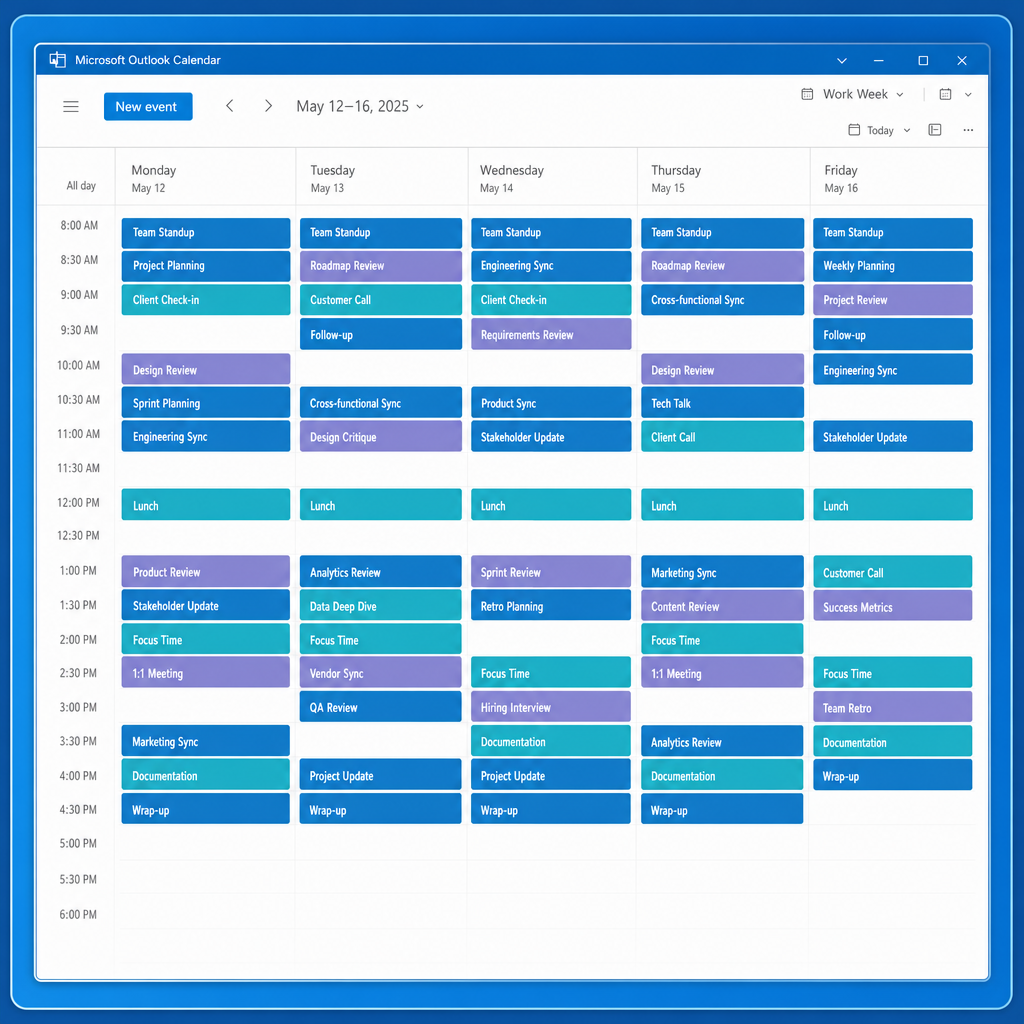
I am always concerned when I step into a team, or a new project, and hear so many people say that they have back-to-back meetings all week and can’t meet until next week. Another frequent statement is “Check my calendar. I should have 15 minutes or so on Friday.”
It might not seem like a big thing until you are the one trying to drive a strategic initiative for which there is very little information – across multiple teams!
If the people I need – whether SMEs or decision makers – are tied up in meetings until next week, my new project just experienced its first blocker.
Meetings are crucial to communication. The meetings are not the problem, but too many meetings can block momentum both at the project level and at the team level.
How to Identify the Symptoms Caused by Too Many Meetings
Before a problem can be fixed, it must be identified.
Recognize any of these?
Real work happens around meetings instead of between them.
In other words, people can’t focus except before the workday begins, after it ends, or maybe during the 15-minute gaps between scheduled calls. This can indicate that the team is operating in a reactive mode instead of a strategic mode.
Meetings repeat themselves in content week after week.
No decisions are made, no movement occurs, and there is no clear ownership. The meeting is no longer a forum for ideas. It is a loop in which no one feels empowered to make a decision, so no decisions are made.
Attendance to meetings is high but engagement is low.
People are in the meeting but instead of contributing they are simply listening in (or worse, multi-tasking). This can manifest when the agenda is vague or the purpose of the meeting is unclear. It can also mean that the wrong people are on the call or there is a lack of shared context to drive alignment and mutual understanding.
Note: Requiring cameras on is only a band-aid, not a solution.
“We need another meeting” becomes the default next step
I point this out because it can mask as progress. It appears that everyone is moving together, but more likely indicates lack of clear decision-making framework or a missing or misstated source of truth.
What These Symptoms Reveal About the Team or the Project
Analyze the symptoms to understand how they impact your team or project. In short, the symptoms can reveal more than one problem.
Decision paralysis or unclear ownership
When no one knows who owns what or ownership falls in a grey zone, meetings become the replacement serving as a place where decisions are more likely to get made.
Lack of trust in documentation
Meetings many times replace email communication because decision-making or even collaboration via email is tricky, particularly when alignment and ownership are unclear. However, another facet of this is the scattered nature of documentation related to the project or team. If it takes too long to gather the relevant information (e.g. the artifacts are decentralized across 4 or 5 channels of communication), a meeting becomes the default.
Over-collaboration as a safety net
Everyone is afraid to make the wrong decision or advocate for a specific next step. Making that decision as a group, in a meeting, is safer.
Hidden misalignment on priorities and strategy
When teams are not aligned adequately, a meeting represents the next best method to stay connected. However, without proper direction and guardrails, the misalignment is not resolved and will continue to grow.
Burnout or cognitive overload
Too many meetings can contribute to burnout and cognitive overload due to context switching, which is the process of shifting your attention from one task to another, requiring your brain to pause, reorient, and recall where you left off. Over time, continual context switching erodes creativity and zaps problem-solving skills. It can even contribute to draining morale!
How to Restore Value to Your Meetings
After identifying the symptoms and the impact to the team or project, methods and processes can be established that can turn things around quickly.
Perform a Meeting Audit
Review every meeting, particularly the recurring meetings.
Ask the following 3 questions:
What is the purpose?
What decisions or outcomes does it produce?
What would break, and how, if we canceled it?
Move Status Updates Away from Meetings (and Emails)
The goal is to find ways to provide status updates that do not require people to sit in a meeting and can consolidate the information in one place that is accessible to anyone. This refers to the concept of asynchronous (as opposed to synchronous) communication, which includes the use of dashboards, shared docs, and other project tools.
Reduce Attendees
Smaller, more focused groups produce better outcomes, particularly when the small group is selected carefully, has the necessary context, and has information that will move the decisions forward. Larger groups can contribute to noise and churn, which lengthen the amount of time needed to make a decision.
Revamp the Meeting Type, Title, and Agenda
Label meetings clearly to reflect the purpose. Include a proposed agenda that lists the decisions that need to be made instead of the topics that need to be discussed.
Final Reflections
Having too many meetings on the calendar is not simply an annoyance – it is a signal that should be taken seriously. It should not be ignored! The signal points to potential process improvements that can be made to shore up uncertainty, provide guidance towards team alignment, and build better communication and structure.
A meeting is not valuable because it fills time on the calendar. A meeting is valuable when it clears the way to achieving a shared goal and allows the team to get back to doing the work that will move the project forward.
 WordRite Solutions